Showing posts with label Animator. Show all posts

Pixar's Toy Story (1995)

Pixar's Toy Story (1995) marks the first success of CG animation as a full feature length film. Its universal success laid the foundation for Pixar Studios to create many more successful CG animation films including the sequel Toy Story 2 (1999), The Incredibles (2004) and the most recent Up (2009).


Toy Story struck a chord with audiences as Woody, Buzz and all the characters were believable where their presence is strongly felt. The simple yet effective three act story structure allows for a very clear and satisfying resolution. Both the original and sequel are often cited as one of the best movies of all time, receiving a 100% 'Certified Fresh' award on Rotten Tomatoes and deemed a must-see by the British Film Institute as one of top 10 films to see by the age of 14.

While Toy Story marked a great step into the world of digital animation, John Lasseter (animator and Head of Pixar Studios) himself states that successful CG animation derives from the very same basic founding principles of all animation; from drawing and a fundamental understanding to traditional animation techniques, to film grammar with shot compositions and storytelling with a three act story structure.


John Lasseter Q&A Any advice for aspiring animation student?

Overall, Toy Story is one of the finest examples of CG animation to date leading to a revolution in the entertainment and animation industries respectfully, as computer animation became recognised as credible form of animation and a popular form of mainstream entertainment in feature films.

Hayao Miyazaki - My Neighbour Totoro (1988)

Japanese animator Hayao Miyazaki, co-founder of Studio Ghibli, is best known for many popular animated films such as NausicaƤ of the Valley of the Wind (1984), Princess Mononoke (1997) and Spirited Away (2001). Recently, I had the pleasure to watch My Neighbour Totoro (1988), one of Miyazaki's early films that propelled him on his road to success.


Being the very face of Studio Ghilbli, My Neighbour Totoro is considered one of Hayao Miyazaki's greatest films with universal acclaim. The story follows two wonderful daughters living with their father in a rural village of Japan, where they encounter a range of friendly wood spirits and the one known as Totoro. Its a delightful plot that will certainly bring a smile to your face.


Made in 1988, the animation and visuals are truly exceptional, with characters moving alive with purpose and charm over lovingly painted backgrounds. The two daughters, Satsuki and Mei, are definite highlights being simply adorable as they capture the blissful innocence and magic of childhood reminiscent in all of us, perhaps more than any other of Miyazaki's films.


Where Disney Animation techniques refers to the use of exaggeration to personify their characters, the animation techniques adopted in Miyazaki's films move with a deliberate economy of movement, a certain grace and stillness that provides a much more personal experience to the character that are meant to be savoured. A prime example is the scene where Totoro is introduced to an umbrella, the animation pausing to hold on the characters with secondary movements relishing and savouring the moment in its entirety.


Another example is when Mei meets the forest spirits for the first time as she squats moving with only a subtle blink of the eye.


Overall, My Neighbour Totoro is an exceptional film capturing the imagination and wonder of childhood with such innocence that is simply awe inspiring - a must see of Miyazaki's films.

Trailer


---
On a side note, the character of Totoro also makes a cameo appearance in the upcoming Toy Story 3 (seen in the trailer 0:48 seconds in), as John Lasseter and Miyazaki are more than acquainted when Miyazaki makes a surprise visit to Pixar studios.

Jan Svankmajer (1934)

Jan Svankmajer is a surrealist artist greatly known for his surreal animations. His works are profoundly iconic with some amazing stop motion animations involving clay.

Dimensions of Dialogue (1982)
An experimental stop motion animation, Dimensions of Dialogue is quite incredible with strange yet wonderful transformations each object undertakes, bearing an amazing aesthetic quality with its quirky movements and in the details as a multitude of finger marks are present in the clay transitions.


Part 1


Part 2


Meat Love (1988)
An amusing short involving pieces of meat - the animation is reminiscent to the format of many animation shorts of contemporary works.


Darkness, Light, Darkness (1989)


Quite possibly one of the craziest, most imaginative stop motion animations with clay I've seen. The pacing is perfect to the slow yet deliberate build up to the creation of man, where the clay modelling is amazing particularly when adding facial features such as the eyes. It is quite uncanny especially with the tongue which was a little unnerving to say the least, and the splash of water moment was quite unexpected one can't help but laugh. Definitely worth checking out.

Ladislaw/Ladislas Starewicz 1882 - 1965

Ladislaw (or Ladislas) Starewicz's The Mascot is a fantastic piece of 3d stop animation film. Made in 1933, the achievement is incredible with the notable attention to detail to movement and aesthetics, as well as the rear screen projection immersing the animation into a real world environment. Little, if any wires are seen at all proving its technical merit.

The Mascot (1933) by Ladislaw/Ladislas Starewicz


Perhaps what struck me most was in the humour and personality that Starewicz was able to create in his characters, being genuinely charming and funny at times with a great sense of sensitivity. It was certainly ahead of its time.

Walt Disney 1901 - 1966

Steamboat Willie (1928)
The first original Disney animation to be produced. It was particularly renown to be the first animation to successful synchronise sound within the animation.


Fantasia (1940)
Disney's Fantasia featured visual animation as an interpretation to classical music, establishing much of the whimsical fantasy that Disney is often associated with. Such as the scene of the dancing mushrooms, bringing inanimate objects to life full of charm and character. It was also featured in full colour.


Night on Bald Mountain Part 1 (1940)
Features a fantastic interpretation of evil, set in a little village at the foot of a mountain.


The art for this quite amazing being particularly dark and unsettling that is often not recognised of Disney.


Mickey The Sorcerer's Apprentice (1940)
Perhaps most renown of Disney's Fantasia, is Mickey as the Sorcerer's Apprentice. The style of animation in full colour with squash and stretch, anticipation and timing is most iconic of Disney, as Mickey is most recognisable as he is today capturing most of his characteristics.


Norman Mclaren 1914 - 1987

Canadian animator Norman Mclaren 1914 - 1987, is a great example of early experimental types of animation.

Lines Horizontals (1962)
Mclaren creates the illusion of movement and speed quite spectacularly with the mere use of horizontal lines.


Le Merle (The Blackbird) 1958
A funny surreal cartoon style animation by Norman McLaren and Evelyn Lambert, in response to a Canadian verse.


Pas de deux (1968)
As two ballet dancers perform, Mclaren adds surreal multi and after-image layering effect for a truly wonderful unique visual effect. Individually, they celebrate the beauty of the human form with strong repeated poses, only to further create interesting abstract forms and movements and these layers begin to overlap.


An extract from 'Canon', here is a another example of Mclauren and his multi, after-image effect with a comical spin - 1964.

Winsor McCay 1867 - 1934

Winsor McCay, an early pioneer of animation techniques, is best known for his animations Little Nemo and Gertie the Dinosaur. Both feature some of the very first examples where hand drawn animation came to life on the big screen to the wonder and amusement of all.

These first animations feature bringing a character to life with movement and intention, while Gertie the Dinosaur develops this further injecting personality into the character.

Little Nemo (1911)


Gertie the Dinosaur (1914)


It is truly remarkable to think how these are some of the first pioneering techniques in hand drawn animation, that still exists to this today. Produced by McCay himself, he became one the first leading examples to demonstrate the power and capabilities of animation.


Sinking of the Lusitania (1918)


I found McCay's Sinking of the Lusitania to be quite exceptional. Made in response to the unprovoked German attack of the liner, McCay developed his earlier techniques to a more serious direction, with the use of line and tone that creates a wonderful aesthetic quality to the animation in the smoke and dripping water of the ship. Smooth almost silk like, its beautiful yet touching as the animation is allowed to rest and settle on the tragic sinking of the liner.

Eadweard Muybridge 1830 - 1904

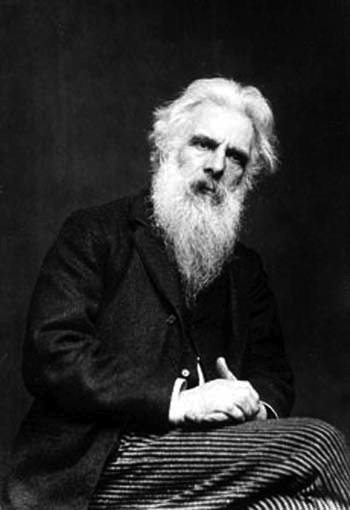
In the founding principles of animation, one cannot forget Eadweard Muybridge, a photographer who is the great founder and pioneer of the moving image that is now known as animation today.


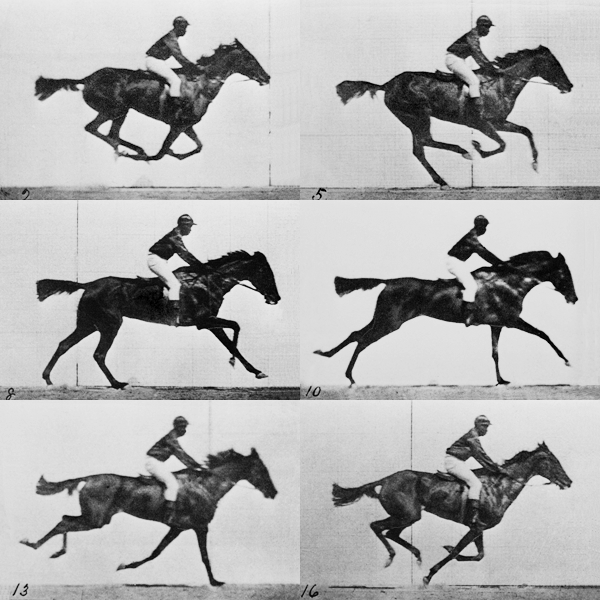
Using multiple cameras, Muybridge essentially discovered and defined the amount of images that needed to be shown every second in order to create the illusion of movement, founding what we know today as the amount of frames per second.


As images are shown in quick secession in a format of 24-25 frames per second, we are able to retain the previous image in our mind to enable us to see the illusion of movement. By examining these individual frames, Muybridge essentially discovered that the running cycle of a horse left the ground on all four hooves for a brief moment in time.

Thus, this is the founding principle of all animation, relying on the perceptual phenomenon that is the persistence of vision to create the illusion of movement. It is an amazing power to behold, effectively having the ability to create new worlds in that of the moving image.

Perhaps a fitting example of this is in the flipbook style animation of Ian Mackinnon and his short film Adjustment. Each individual image is lovingly drawn for a truly incredible effect in the midst of a story of a failing relationship.