As the first project comes to a close, I've taken a moment to gather my thoughts on the project with the benefit of hindsight.
Today's first crit session was very insightful in seeing the wide variety of outcomes to the project with the various different approaches taken. It really established a sense of unity, as the group could conform as a whole with truth and honesty where no shame is to be had. Notably, the more successful pieces held a strong and compelling conceptual quality where technical aspects could be overcome by providing a sense of depth and intrigue.
In the beginning of the project, I did not have a specific idea set in my sights that left me feeling a little astray. By looking into different artists, concepts and later forming my own interpretation of the essential problem in self-portraiture, was I able to let the project guide me in my aesthetic choices that really allowed me to develop my portrait on a conceptual level with a wide range of experimentations. With several ideas and concepts that I felt had potential, it became difficult for me to fathom and combine all of these into a specific direction, where I could feel I made that successful creative leap in creating a resolved final piece that I could be satisfied with. Only by taking a step back and focusing on a single and strong idea was I able take a creative leap in my final portrait in portraying a dramatic instance of my identity.
Perhaps, with more time I would re-look into my initial attempts in the layering of digital painted instances of myself, and consider some further differences in the expression of my face either emotionally or in entirely different conceptual manner.
At this point in time, I think my essay went smoothly as planned exploring: 'A Transition of Photography in Portraiture and the Nature of Identity in the 20th and 21st Century' contrasting a number of early photographic works of Yousuf Karsh, Arnold Newman and Lee Miller, to contemporary artists Claudia Matzko, Aziz + Cucher and Eva Lauterlein, reflecting the transition between the two periods. Time will tell in how successful I achieved this.
Overall, I am pleased with my progress and outcome in the first project. Having tackled the first project, I am feeling quite excited and motivated more than ever to engage with the next project in my creative development.
Showing posts with label Year 1: Unit 1. Show all posts
Showing posts with label Year 1: Unit 1. Show all posts
Final Portrait
Read on from previous post
With my previous attempts lacking, I decided to simplify things a little and focus on the one idea to push through. This final self portrait reveals a dramatic instance of my identity, a state of absolute despair (perhaps in trying to develop a substantial final portrait!), in an invigorating manner with a dynamic layering of painterly strokes. Such a choice of emotion not only becomes more fitting in the expressive chaotic nature, but is also highly personal and revealing of my own part of identity.
Final Portrait


While I am very pleased with the outcome feeling that it greatly captures the essence of myself, progressing far from my previous digital paintings in achieving an expressive painterly feel; I cannot help but feel I am missing a creative leap if you will. I've attempted to do much more on a conceptual level but just could not achieve a standard where I could be satisfied on the execution. Perhaps I'm just being too critical of myself and is just me thinking all too hard.
Nevertheless, here is my final portrait in portraying a dramatic instance of my identity, that I hope you'll all enjoy. Your feedback and thoughts are most welcome.
With my previous attempts lacking, I decided to simplify things a little and focus on the one idea to push through. This final self portrait reveals a dramatic instance of my identity, a state of absolute despair (perhaps in trying to develop a substantial final portrait!), in an invigorating manner with a dynamic layering of painterly strokes. Such a choice of emotion not only becomes more fitting in the expressive chaotic nature, but is also highly personal and revealing of my own part of identity.
Final Portrait


While I am very pleased with the outcome feeling that it greatly captures the essence of myself, progressing far from my previous digital paintings in achieving an expressive painterly feel; I cannot help but feel I am missing a creative leap if you will. I've attempted to do much more on a conceptual level but just could not achieve a standard where I could be satisfied on the execution. Perhaps I'm just being too critical of myself and is just me thinking all too hard.
Nevertheless, here is my final portrait in portraying a dramatic instance of my identity, that I hope you'll all enjoy. Your feedback and thoughts are most welcome.
Leave a comment:
2
comments

Developing Final Portrait
With several different approaches to my self portraits following the idea of portraiture being limited in portraying one's whole identity, it has been difficult for me to narrow down a precise direction to undertake.
Where the previous digital painting is aesthetically pleasing capturing a dramatic instance of my identity, the later photographic manipulations prove significant on a conceptual level with several combined instances collectively portraying aspects of my identity. Thus, I tried to combine the two to progress onwards to form a complete final piece. Combining these two ideas has resulted undesirably with neither outcomes feeling decisive enough to fully deliver.


I experimented in layering several instances of myself that collective portray a greater whole of my identity, similar to my previous photographic layering of colour, yet this time with the aesthetic quality of a digital painting. Perhaps intriguing in their own right, I'm just not satisfied in the way each were developing to take them further. It seems a little too contrived and unimaginative in its execution which just leads me to feel a bit downhearted in thought.
Read on to next post
Where the previous digital painting is aesthetically pleasing capturing a dramatic instance of my identity, the later photographic manipulations prove significant on a conceptual level with several combined instances collectively portraying aspects of my identity. Thus, I tried to combine the two to progress onwards to form a complete final piece. Combining these two ideas has resulted undesirably with neither outcomes feeling decisive enough to fully deliver.


I experimented in layering several instances of myself that collective portray a greater whole of my identity, similar to my previous photographic layering of colour, yet this time with the aesthetic quality of a digital painting. Perhaps intriguing in their own right, I'm just not satisfied in the way each were developing to take them further. It seems a little too contrived and unimaginative in its execution which just leads me to feel a bit downhearted in thought.
Read on to next post
Leave a comment:
0
comments
Life Drawing #4
Fourth life drawing session today, this time with some most welcome variety to keep things fresh. We now included more of the space around the model with some tricky easels thrown into the mix, as well as committing to faster studies for more dynamism. The first piece focuses on capturing negative space to define the form, an intriguing method that can help train one to draw what they see. It was pretty new to me and proved a challenge.

Afterwords, creating timed studies of around 7-15 minutes in any preference with the focus on more dynamism rather than acute detail. Some bearing several pieces on one page.


I feel fairly satisfied with the results, some fairing better than others. The interaction of the model with the surrounding space proved challenging at times in maintaining a sense of proportion with overlapping elements. Where some areas such as the feet are very obscured adding to the complexity of the piece as a whole, particularly with the last piece where I am unable to define any sense of two distinct legs and feet.

Afterwords, creating timed studies of around 7-15 minutes in any preference with the focus on more dynamism rather than acute detail. Some bearing several pieces on one page.


I feel fairly satisfied with the results, some fairing better than others. The interaction of the model with the surrounding space proved challenging at times in maintaining a sense of proportion with overlapping elements. Where some areas such as the feet are very obscured adding to the complexity of the piece as a whole, particularly with the last piece where I am unable to define any sense of two distinct legs and feet.
Leave a comment:
4
comments
Detective's Desk Scene
Finally completed the Detective's Desk scene with a Beauty pass, Ambient Occlusion and Zdepth pass. The entire scene was created by Alan where we have the pleasure to add the final rendering touches, which really do make a difference when compared to the single basic render.

Looking back, we've learnt quite a fair bit in just 4 induction lessons thanks to Alan. I look forward to whats in store for the next set of Maya Workshops!
Looking back, we've learnt quite a fair bit in just 4 induction lessons thanks to Alan. I look forward to whats in store for the next set of Maya Workshops!
Leave a comment:
4
comments
Poker Chips
Creating Poker Chips with manual UV layout mapping and applying a custom texture made in Photoshop. I also added some extra details to the poker chip texture for a bit of fun.
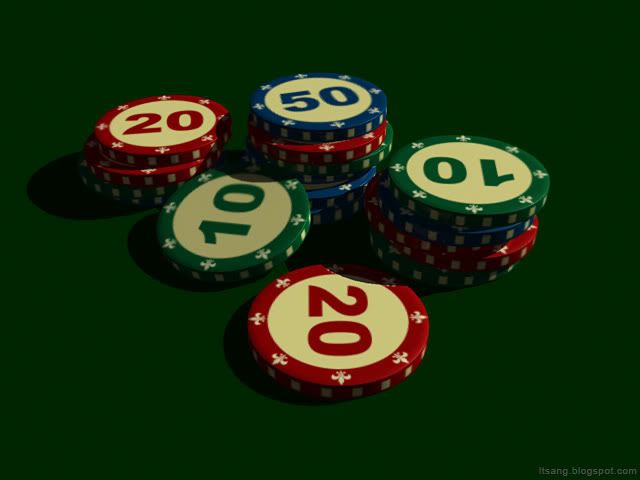
A cookie for who can tell me the total worth of chips on the table...
A cookie for who can tell me the total worth of chips on the table...
Leave a comment:
2
comments
Glass Bottle with Label
Maya workshop covering how to texture a bottle with a label, with a glass blinn combined with a texture using alpha channel transparency.

Leave a comment:
0
comments
Common Materials
Maya workshop covering common material types made entirely from Blinns and Lamberts. The diversity of materials made from just two common shader types is quite amazing.
Clay/Matte, Glass, Plastic and Silver

Chrome, Gold, Glow and Hidden Glow

I wonder if this guy has a name?
Clay/Matte, Glass, Plastic and Silver
Chrome, Gold, Glow and Hidden Glow
I wonder if this guy has a name?
Leave a comment:
2
comments
Layering of Self
Following the idea of portraiture capturing instances of oneself that pertain to the truth of ones' own identity as a whole, I have experimented with this colourful idea.

With a deliberate layering effect of colour, each 'instance' of my self collectively pertains to my identity. This first example bearing just two instances of myself as an experimentation, with the use of colour reflecting the mood and expression of each 'self'. The arching beams (remnants of the original photo) while providing intrigue and a sense of completion to composition as a whole, I think is now a little too abstract not really contributing to my identity.

I later took this further with several more instances of myself and better sense complimentary of colours for a stronger portrait. Each instance overlays each other for an intriguing effect pertaining to the sense of layers in the nature of identity, with the colours providing a visually striking presentation. Again, the lack of background focuses the piece as a whole with less abstract distortions to detract from the piece.
Overall, I am pleased with the result and wonder how much further I can take it visually and conceptually as a whole.

With a deliberate layering effect of colour, each 'instance' of my self collectively pertains to my identity. This first example bearing just two instances of myself as an experimentation, with the use of colour reflecting the mood and expression of each 'self'. The arching beams (remnants of the original photo) while providing intrigue and a sense of completion to composition as a whole, I think is now a little too abstract not really contributing to my identity.

I later took this further with several more instances of myself and better sense complimentary of colours for a stronger portrait. Each instance overlays each other for an intriguing effect pertaining to the sense of layers in the nature of identity, with the colours providing a visually striking presentation. Again, the lack of background focuses the piece as a whole with less abstract distortions to detract from the piece.
Overall, I am pleased with the result and wonder how much further I can take it visually and conceptually as a whole.
Leave a comment:
2
comments
Scream
While working on a piece, I stumbled upon this rather dramatic composition that I thought worth saving - a happy accident if you will.

Similar to my previous obscure self-portraits, this piece captures an expressive moment in deliberate clarity. The lack of background once more provides an effective means in creating a dramatic composition that serves well for a gripping portrait. A sense of isolation also creeps in adding to a peculiar sense of depth to the piece as a whole. Where the previous lack of colour helped perpetuate a further sense of obscurity, the returning colour seems to ground the piece in reality for a dramatic effect.
In its entirety, I believe this portrait captures a precise instance of my own identity that becomes particularly expressive in a dramatic manner - something which I may come back to.

Similar to my previous obscure self-portraits, this piece captures an expressive moment in deliberate clarity. The lack of background once more provides an effective means in creating a dramatic composition that serves well for a gripping portrait. A sense of isolation also creeps in adding to a peculiar sense of depth to the piece as a whole. Where the previous lack of colour helped perpetuate a further sense of obscurity, the returning colour seems to ground the piece in reality for a dramatic effect.
In its entirety, I believe this portrait captures a precise instance of my own identity that becomes particularly expressive in a dramatic manner - something which I may come back to.
Leave a comment:
1 comments
Obscurity
Indeed, I think we are so complex and fragmented as individuals constantly shifting and changing, that to capture all of this in in single portrait is simply unfathomable. To reflect this epiphany, I have explored some further techniques in photography (as to not limit myself to digital painting) experimenting with these compositions.
The lacking nature of a portrait can only lead us to obscurity as the composition in these pieces reflect this, being only able to see a small glimpse of my identity shrouded in darkness. While the lack of colour or any background environment further removes myself as the subject, focusing the piece and any aspect of my identity solely by my face alone.
Initial experimentation with a downward cast and subtle expression

Later, more refined experimentation with a more confrontational composition

The technique is perhaps a little simple, but I would argue effective in depicting the obscure nature of identity and the problems it implies on a self-portrait. At best, I think we can only capture instances of our identity that pertain to the truth of ones' own identity as a whole. With this in mind, I feel I can take this further to explore some further ideas.
The lacking nature of a portrait can only lead us to obscurity as the composition in these pieces reflect this, being only able to see a small glimpse of my identity shrouded in darkness. While the lack of colour or any background environment further removes myself as the subject, focusing the piece and any aspect of my identity solely by my face alone.
Initial experimentation with a downward cast and subtle expression

Later, more refined experimentation with a more confrontational composition

The technique is perhaps a little simple, but I would argue effective in depicting the obscure nature of identity and the problems it implies on a self-portrait. At best, I think we can only capture instances of our identity that pertain to the truth of ones' own identity as a whole. With this in mind, I feel I can take this further to explore some further ideas.
Leave a comment:
0
comments
Rage/Despair
Continuing from my previous digital painting portraits, I have tried a much more dynamic and expressive palette to achieve something more painterly, capturing an instance of my own identity. I originally intended to capture a raging anger, although sometimes as I look at it I find it more possessive of a quiet despair. Thus, the piece itself can reflect the layering of our multiple identities in the vigour of strokes suggestive of chaos, anger and despair.

Although I am pleased with the results, I wonder how much further I can take this on a conceptual level. It pains me to say it, but perhaps I have been caught up in the passion of creating a digital painting that is hampering my exploration of portraiture and the nature identity. With thoughts like these, I guess its time to move on and allow the concept to guide my aesthetic choices rather than the other way round.


Although I am pleased with the results, I wonder how much further I can take this on a conceptual level. It pains me to say it, but perhaps I have been caught up in the passion of creating a digital painting that is hampering my exploration of portraiture and the nature identity. With thoughts like these, I guess its time to move on and allow the concept to guide my aesthetic choices rather than the other way round.

Leave a comment:
3
comments
The Essential Problem in Self Portraiture
What is the essential problem in creating a self portrait?
A question which I have been asking myself over the past few weeks to decipher a decisive problem to guide my aesthetic choices and come fourth with a solution.
I believe the essential problem in creating a self portrait is the inability to fully capture the identity of oneself in a singular image. Our identity as human beings is constantly shifting, fluid and many sided, how can one possibly hope to capture all of this? Perhaps, it can be said that there is no longer a single 'core' self, being so fragmented and deconstructed as individuals in a modern society. Can one only hope to capture an instance of ones own identity? And not in its complete entirety?
With this idea in mind, I will continue to explore this essential problem in portraiture which will help guide my aesthetic choices for my own self portrait.
A question which I have been asking myself over the past few weeks to decipher a decisive problem to guide my aesthetic choices and come fourth with a solution.
I believe the essential problem in creating a self portrait is the inability to fully capture the identity of oneself in a singular image. Our identity as human beings is constantly shifting, fluid and many sided, how can one possibly hope to capture all of this? Perhaps, it can be said that there is no longer a single 'core' self, being so fragmented and deconstructed as individuals in a modern society. Can one only hope to capture an instance of ones own identity? And not in its complete entirety?
With this idea in mind, I will continue to explore this essential problem in portraiture which will help guide my aesthetic choices for my own self portrait.
Leave a comment:
0
comments
Robot + Rocket Animation
I guess you could call these my first Maya animation scenes, thanks to the workshops by Alan. It took some time to render a 25 fps 3 second and 5 second scene, I'm dreading to think how long it will take to fully render some complete animation sequences of longer length!
Robot Animation scene
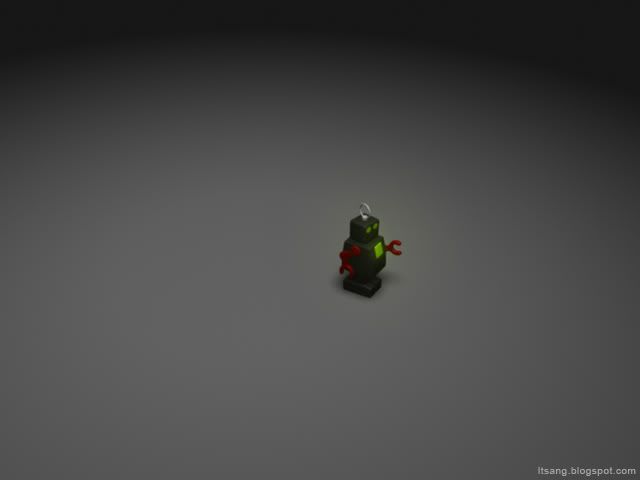
*...Bleep...blop...*
Rocket Animation scene
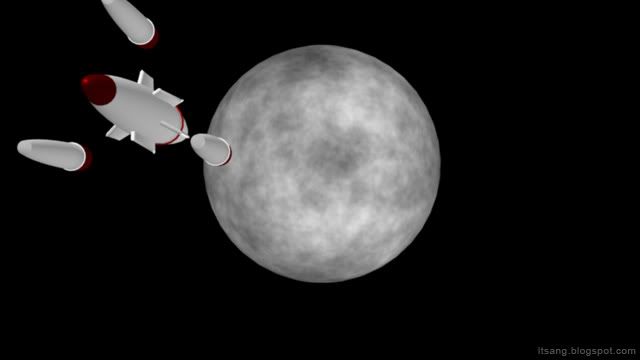
Robot Animation scene
*...Bleep...blop...*
Rocket Animation scene
Leave a comment:
1 comments
Stylisic Lighting
More lighting with this workshop covering Morning, Day and Night mood lighting, along with Horror, Sci-Fi and a Fire effect type lighting. Simple and an effective means to add a sense of mood and depth to an otherwise normal scene.
Morning, Day and Night

Horror, Sci-Fi and Fire lighting effect

Morning, Day and Night
Horror, Sci-Fi and Fire lighting effect
Leave a comment:
0
comments
1, 2 & 3 Point Lighting
Completed the workshop tasks focusing on various ways to light a scene. Thanks to Emily and Ruben for the help on the 1 Point Lighting Rear scene! Be sure to break the light links on the door panel and key light itself to light the ground plane.
1 Point Lighting Front

1 Point Lighting Rear

2 Point Lighting

3 Point Lighting

1 Point Lighting Front

1 Point Lighting Rear

2 Point Lighting

3 Point Lighting

Leave a comment:
0
comments
Pixar's Up
Saw Pixar’s Up today, a film following Mr Fredricksen and his adventure to fulfil a lifelong dream.

The film may begin with a sad touch, but develops into a fantastic tale that is thoroughly enjoyable with a dynamic set of interesting characters that you cannot help but fall in love with. The plot being fun and quirky, works surprisingly well that really gives a sense of depth to the characters as you understand each of their goals and motivations, later engaging with each other for a mixture of emotional highs and lows. I watched this in 3D which I don't think is essential, but really gave a nice touch to the animation as a whole with an improved sense of depth and sharper details.
There was also a new Pixar short before the film, with a wonderful little animation with the clouds creating new life. Its these little touches that really make Pixar that little bit special.
Watching this, it made me think of what actually makes comedy or something funny? To create humour in an animation is quite a task when I think of it, and something that we easily take for granted.
Overall, Pixar's Up is a fantastic film full of life and character that I declare a must-see animation film!
The film may begin with a sad touch, but develops into a fantastic tale that is thoroughly enjoyable with a dynamic set of interesting characters that you cannot help but fall in love with. The plot being fun and quirky, works surprisingly well that really gives a sense of depth to the characters as you understand each of their goals and motivations, later engaging with each other for a mixture of emotional highs and lows. I watched this in 3D which I don't think is essential, but really gave a nice touch to the animation as a whole with an improved sense of depth and sharper details.
There was also a new Pixar short before the film, with a wonderful little animation with the clouds creating new life. Its these little touches that really make Pixar that little bit special.
Watching this, it made me think of what actually makes comedy or something funny? To create humour in an animation is quite a task when I think of it, and something that we easily take for granted.
Overall, Pixar's Up is a fantastic film full of life and character that I declare a must-see animation film!
Leave a comment:
0
comments
Life Drawing #3
Third life drawing session this time with a male model - and a sword! Three pieces this session as we continue to measure proportion while also taking background surroundings into consideration, with easels and other fellow life drawers added into the mix.


The final being a 5 minute sketch was a welcome change of pace, focusing on quickly capturing the form as a whole with dynamic use of lines.


The final being a 5 minute sketch was a welcome change of pace, focusing on quickly capturing the form as a whole with dynamic use of lines.
Leave a comment:
0
comments
The Elephant Man
The Elephant Man (1980) portrays the story of Joseph Merrick, known as John Merrick in the film.
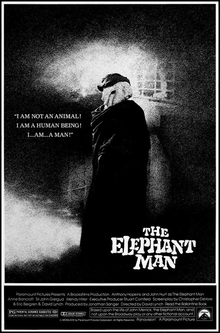
A heartbreaking tale of a severely disfigured man from birth, demonstrating his struggle through life as he is abused and wildly ridiculed. Only a handful of individuals are able to give him some joy in his short life.
The film itself carries an initial sense of foreboding as we are lured into the sight of John Merrick, later becoming distinctly sympathetic as we come to learn and care for Merrick himself. His shy and quiet kindness only heightens the sense of sorrow and sympathy as it is clear that he does not deserve the misfortune bestown upon him. John Hurt does a brilliant role in capturing this, as well as Anthony Hopkins who is later questions his own actions as to whether they have done the right thing or simply perpetuated the notions of a freak show but on a grander scale.
A quick search through Google images reveals a wide number of shocking cases similar to The Elephant Man even to this day, with an example being of Huang Chuncai. I have provided a link though be warned, its not for the faint hearted.
As such, The Elephant Man demonstrates the effects on society the disfigurement of an integral part of our identity, the face, can have. When this is taken away, we feel uncomfortable being confronted by the lack of a tangible identity to grasp on to, a concept explored by artists such as Aziz Cucher in the obliteration of the face and identity.
Overall, a good yet sorrowful tale that will leave you in quiet sympathy for one known only as 'The Elephant Man'.
A heartbreaking tale of a severely disfigured man from birth, demonstrating his struggle through life as he is abused and wildly ridiculed. Only a handful of individuals are able to give him some joy in his short life.
The film itself carries an initial sense of foreboding as we are lured into the sight of John Merrick, later becoming distinctly sympathetic as we come to learn and care for Merrick himself. His shy and quiet kindness only heightens the sense of sorrow and sympathy as it is clear that he does not deserve the misfortune bestown upon him. John Hurt does a brilliant role in capturing this, as well as Anthony Hopkins who is later questions his own actions as to whether they have done the right thing or simply perpetuated the notions of a freak show but on a grander scale.
A quick search through Google images reveals a wide number of shocking cases similar to The Elephant Man even to this day, with an example being of Huang Chuncai. I have provided a link though be warned, its not for the faint hearted.
As such, The Elephant Man demonstrates the effects on society the disfigurement of an integral part of our identity, the face, can have. When this is taken away, we feel uncomfortable being confronted by the lack of a tangible identity to grasp on to, a concept explored by artists such as Aziz Cucher in the obliteration of the face and identity.
Overall, a good yet sorrowful tale that will leave you in quiet sympathy for one known only as 'The Elephant Man'.
Leave a comment:
0
comments
Arnold Newman + Essay Development
I've been refining my essay idea looking through a number of resources. The book 'Interviews with Master Photographers' has provided a fantastic insight into the techniques and philosophies of photographers, particularly with portraiture photographers Yousuf Karsh and Arnold Newman.
Newman interested me in particular with his ideas that photography is not confined to realism, but gains a 'new power when it is released from realism'. To the contrary to popular belief, Newman finds 'many things false in photography' but rather an illusion of reality that we must recognise and interpret like any other art form.
Newman produced a particularly powerful piece of Alfried Krupp, a 'horrible human' who chained his slaves to machinery of his arms factory to stop them from escaping when the bombers came. He underfed his workers 'even to Nazi standards', sending them to concentration camps once they underperformed. Newman himself states that the subject makes the piece, suggesting that he has simply portrayed the Krupp for who he is, essentially as 'the face of evil'.

A powerful portrait, if a little contrived, reminiscent to the power a portrait can have with the previous example of Myra Hindley.
---
Being well aware of the vastness of my initial essay title, I have begun to narrow this down adjusting the focus to look at an area of transition in photographic portraiture. Thus, I am considering the title of: 'A Transition of Photography in Portraiture and the Nature of Identity', which hopefully narrows down the subject area of focus.
The structure would consist:
Thoughts and feedback are welcome.
Newman interested me in particular with his ideas that photography is not confined to realism, but gains a 'new power when it is released from realism'. To the contrary to popular belief, Newman finds 'many things false in photography' but rather an illusion of reality that we must recognise and interpret like any other art form.
Newman produced a particularly powerful piece of Alfried Krupp, a 'horrible human' who chained his slaves to machinery of his arms factory to stop them from escaping when the bombers came. He underfed his workers 'even to Nazi standards', sending them to concentration camps once they underperformed. Newman himself states that the subject makes the piece, suggesting that he has simply portrayed the Krupp for who he is, essentially as 'the face of evil'.

A powerful portrait, if a little contrived, reminiscent to the power a portrait can have with the previous example of Myra Hindley.
---
Being well aware of the vastness of my initial essay title, I have begun to narrow this down adjusting the focus to look at an area of transition in photographic portraiture. Thus, I am considering the title of: 'A Transition of Photography in Portraiture and the Nature of Identity', which hopefully narrows down the subject area of focus.
The structure would consist:
- Small introduction of photographic portraiture
- Photography's attempt to capture identity of the soul and essence of the subject
- Conversely following photography's obliteration of identity
- Conclusion
Thoughts and feedback are welcome.
Leave a comment:
0
comments
Subscribe to:
Posts (Atom)


